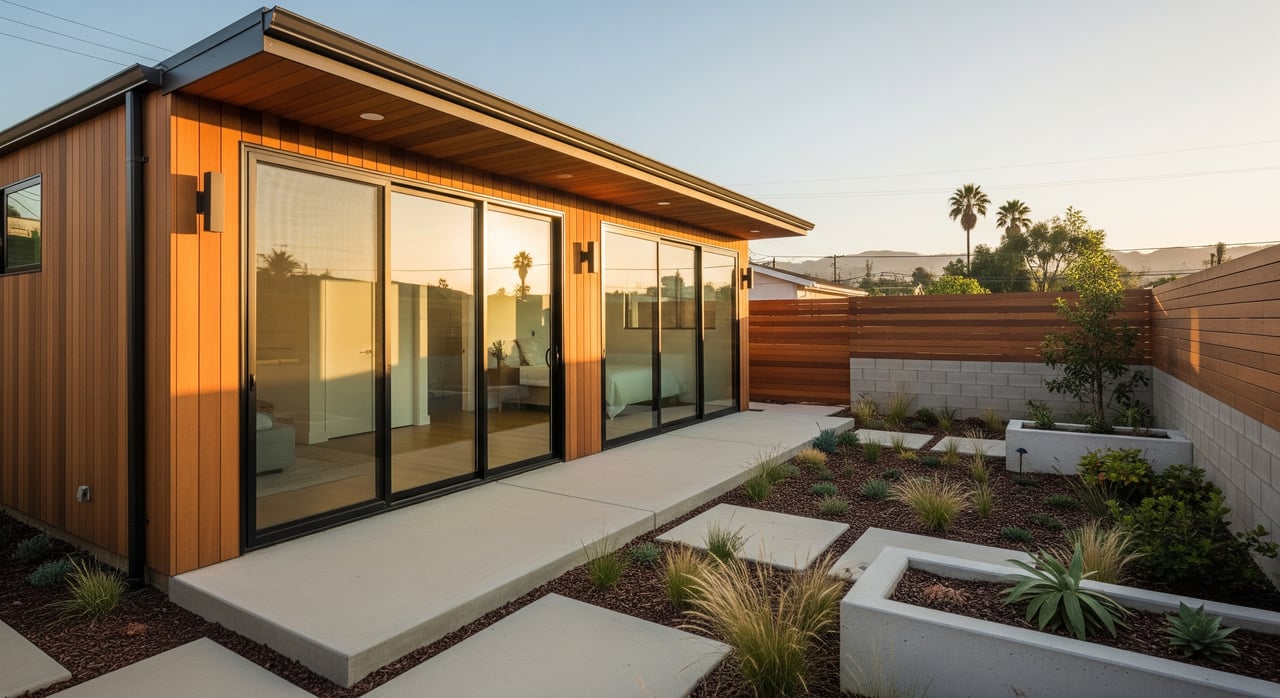
Thinking about adding an accessory dwelling unit to your Los Angeles property? You are not alone. ADUs can unlock rental income, accommodate family, and boost resale value, but LA’s rules can feel complicated. This guide breaks down the standards that matter most in the City of Los Angeles so you can plan with confidence and avoid surprises. Let’s dive in.
How ADUs are regulated in LA
Los Angeles follows a two-part framework. State law sets your baseline rights to build an ADU or junior ADU with ministerial approval when you meet objective standards. The City of Los Angeles then applies its own zoning and building rules through City Planning and the Department of Building and Safety.
What this means for you: your project must satisfy both state requirements and LA’s objective standards. Where state law is more protective, it limits what the city can require. Parking and owner-occupancy rules are common examples where state rules control.
ADU types you can build
- Conversion ADU: Creates a separate unit inside your existing home. Often the simplest path because the exterior stays the same.
- Attached ADU: A new addition connected to your primary home.
- Detached ADU: A separate, stand-alone unit, usually in the rear yard.
- Junior ADU (JADU): Up to 500 square feet within your existing home with its own entrance and shared utilities.
- Multiple ADUs: Options for more than one unit exist on many single-family lots. Availability depends on your parcel’s zoning and overlays, so confirm early with City Planning or LADBS.
Core design rules to plan around
The city uses objective standards that vary by ADU type, zoning, and any overlays on your lot. The details below highlight what most owners need to consider. Always verify your parcel’s exact limits before designing.
Height
Detached ADUs typically face lower height caps than the primary house to keep the ADU subordinate. Some zones limit detached units to a single story. In hillside areas, expect stricter height controls and potential story caps.
Practical tip: If your lot slopes or the ADU could be visible from ridgelines, plan for tighter height and massing to avoid delays.
Setbacks
State law allows reduced setbacks for ADUs, and Los Angeles often allows smaller side and rear setbacks than for the main house. Conversions and attached ADUs usually fit existing setbacks, so the issue is most important for detached units. The exact numbers depend on your zone and lot size, so confirm them before you pick a footprint.
Size and floor area
LA caps ADU floor area to keep it compatible with the lot and main home. State law limits how restrictive those caps can be. Across California, many cities allow detached ADUs up to roughly 1,000 to 1,200 square feet, with smaller limits for conversions and JADUs. Your maximum will depend on local rules and your lot, so check before finalizing your plans.
Parking
Parking is often flexible. Under state law, you do not need new parking if:
- The ADU is within one-half mile of public transit.
- You convert existing space within the primary building.
- The property is in a historic district.
- On-street permits are required but not available to the ADU occupant.
When none of those apply, LA may require a space, but tandem or covered solutions can be acceptable. If you convert a garage, you usually do not need to replace those spaces with new covered parking.
Utilities and fire/safety
All ADUs must meet building, electrical, plumbing, and fire code. Detached units may need separate utility connections or approved metering. In hillside or multi-story scenarios, you may need enhanced fire access or sprinklers based on location and design. Early coordination with your designer helps you avoid costly changes later.
Hillside and overlay zones
Your overlay can change the rules. Before you sketch a plan, confirm whether your parcel sits in any special areas.
Hillside Ordinance lots
Hillside standards aim to limit grading, protect ridgelines, and reduce visual impacts. On sloped lots you may face:
- Stricter maximum envelopes, stepbacks, or story limits.
- Geotechnical studies and erosion control plans.
- Longer timelines and possible discretionary review if you exceed objective thresholds.
A relatively flat rear yard in a standard neighborhood is usually more straightforward. Hollywood Hills and Santa Monica Mountains parcels often require deeper analysis.
Historic Preservation Overlay Zones (HPOZ)
ADUs in HPOZs usually require design review for compatibility with the historic streetscape. Materials, rooflines, and placement can be constrained. Internal conversions that leave the exterior unchanged may be easier.
Specific Plans and CPIOs
Specific Plans and Community Plan Implementation Overlays can add objective design and placement rules that apply on top of base zoning. Even a code-compliant ADU must meet the overlay’s standards. If the overlay requires discretionary review for certain features, your project can lose ministerial status and face a longer path.
What this means for you
Run a parcel check with City Planning or a qualified professional before you invest in design. The mix of base zoning and overlays determines whether you can use a fast, ministerial route or need a custom approach and more time.
Permit pathways: custom vs. pre-approved plans
Los Angeles supports two practical permitting paths. Your choice affects cost, speed, and how much you can tailor the design.
Custom design and standard plan check
- Process: Hire an architect or designer, produce a site-specific plan set, submit to LADBS, respond to corrections, and pull the permit.
- Pros: Tailors the ADU to your lot and goals, lets you work around slope or design constraints, and can maximize size and rent potential.
- Cons: Higher design fees, more plan check iterations, and longer timelines. Hillside or overlay issues can introduce discretionary review.
Pre-approved Standard Plans
- Concept: Choose a plan from the city’s pre-approved ADU library. Plan check focuses on your site, foundation, and utilities.
- Pros: Faster permits, lower design costs, and fewer corrections. Many owners get to construction sooner.
- Cons: Limited customization. Odd lot shapes, steep slopes, or overlays can make a standard plan a poor fit. You may not maximize size or rental value.
Time and cost expectations
- Permitting timeline: Pre-approved plans can move through plan review in weeks for straightforward parcels. Custom designs commonly take several months for design and plan check, plus more time if a discretionary review applies.
- Soft costs: Design and engineering fees are typically lower with standard plans. Custom design costs more but can pay off in unit quality and rent.
- Construction costs: A new detached ADU in Los Angeles commonly ranges around 150,000 to 400,000 plus depending on size, finishes, and site conditions. Conversions of existing space are usually substantially less and often well below 150,000. Actual costs vary by contractor, market conditions, and site work.
Value, rent, and payback
Resale value
A well-designed, permitted ADU can increase your property’s value and marketability. Buyers often value a legal second unit because it supports rental income and flexible living arrangements. Unpermitted units carry risk and tend to deliver less resale value.
Rental income
Rents depend on unit size, finishes, neighborhood, and transit access. Custom designs with higher-quality finishes can command stronger rent but cost more to build. Balance monthly rent potential with your upfront budget and timetable.
Payback horizon
Payback periods vary. Internal conversions often pay back faster because the construction cost is lower. A high-end detached ADU on a hillside lot may take much longer due to site work, utilities, and design complexity. Build a conservative pro forma with honest rent, vacancy, and maintenance assumptions.
Your step-by-step ADU roadmap
- Screen your parcel. Confirm base zoning, overlays, and whether you are in a Hillside Ordinance area, Specific Plan, or HPOZ.
- Choose an ADU type. Decide between conversion, attached, detached, or a JADU based on budget and goals.
- Check parking exemptions. Measure transit proximity and consider whether a conversion exemption applies.
- Evaluate pre-approved plans. If your lot is typical and constraints are minimal, a Standard Plan can cut time and cost.
- If constrained, go custom. Hire a designer with LA ADU experience. Add a geotechnical engineer for hillside or complex sites.
- Get multiple bids. Include construction, design, engineering, permits, contingencies, and realistic rents and vacancy in your budget.
- Submit for permits. Plan for possible HPOZ or overlay reviews that can add time.
- Build and close out. Keep final approvals and documentation. A fully permitted ADU holds far more value and reduces risk.
Common pitfalls to avoid
- Skipping the overlay check. Overlays can change the path from ministerial to discretionary and add months.
- Assuming you must add parking. You may qualify for an exemption. Verify before you redesign the site.
- Overestimating size. Many parcels cannot support the largest ADU due to setbacks, height, or overlays. Confirm limits first.
- Designing before budgeting. Get realistic bids and include utility upgrades, grading, or fire requirements if needed.
- Starting work without permits. Unpermitted units risk fines, forced changes, and reduced resale value.
The bottom line
You can design and build an ADU in Los Angeles with a clear plan. Start with your parcel’s rules, pick the right permitting pathway, and model costs and rents conservatively. If your lot is straightforward, a pre-approved plan can get you moving fast. If your site has overlays or you want to optimize rent and resale, a custom design is often worth the time and fees.
If you want a legally informed strategy that aligns with your goals, schedule a free consultation with The Gordon Group. We help Los Angeles and Orange County owners evaluate feasibility, model costs and returns, and connect with the right design and build team.
FAQs
How big can an ADU be in Los Angeles?
- LA sets maximum ADU sizes influenced by state law. Many jurisdictions allow detached units around 1,000 to 1,200 square feet, but your exact cap depends on zoning and overlays. Confirm with LADBS or City Planning for your parcel.
Do I need to provide a parking space for an ADU in LA?
- Maybe. There is no new parking required if you are within one-half mile of transit, converting existing space within the home, in a historic district, or if on-street permits are required but not available to the ADU occupant. Otherwise, LA may require a space, and tandem or covered solutions may be acceptable.
Are hillside lots eligible for ADUs in Los Angeles?
- Yes, but hillside rules can add geotechnical studies, stricter height and story limits, and potential discretionary review. Feasibility depends on slope, access, visibility, and grading limits.
Is it faster to use a pre-approved Standard Plan for an ADU?
- Often yes for typical parcels. Pre-approved plans focus plan check on site specifics and can shorten review to weeks. Irregular lots, overlays, and hillside conditions may still require custom design.
How much does an ADU cost to build in Los Angeles?
- New detached ADUs commonly range around 150,000 to 400,000 plus based on size, finishes, and site work. Conversions usually cost substantially less and often come in well below 150,000. Get local bids to refine your budget.